



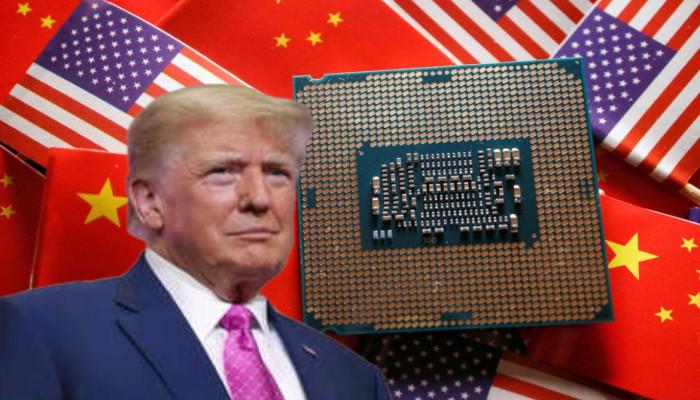
Former U.S. President Donald Trump blocks chips deal initiatives that involve foreign-linked semiconductor investments, citing heightened national security risks and deepening concerns over China’s influence in critical technology supply chains.
The decision reflects a broader policy direction aimed at tightening control over strategic industries, particularly those tied to advanced computing, defense systems, and data infrastructure.
Why Trump Blocks Chips Deal Proposals
The chips industry is central to modern economic and military power. When Trump blocks chips deal negotiations, the justification centers on three core risks:
National Security Exposure
Advanced semiconductors power defense systems, surveillance platforms, and encrypted communications. Allowing foreign-linked entities access to U.S. chip manufacturing raises concerns about espionage, backdoors, and supply manipulation.
China Technology Linkages
Several proposed deals reportedly involved indirect connections to Chinese firms or supply networks. U.S. policymakers view this as a strategic vulnerability, especially amid ongoing technology competition with Beijing.
Supply Chain Control
By blocking these deals, Trump reinforces the position that semiconductor production must remain under U.S. or allied control to avoid future disruptions or geopolitical leverage.
Impact on the Global Semiconductor Market
Trump blocks chips deal decisions send a clear signal to global investors and manufacturers:
Stricter Deal Scrutiny
Cross-border mergers and acquisitions in the tech sector now face heavier national security reviews, particularly those involving Asia-based partners.
Shift Toward Domestic Manufacturing
The move accelerates efforts to localize chip production within the U.S., reducing reliance on overseas fabrication hubs.
Market Uncertainty
While intended to protect long-term interests, blocked deals can delay innovation timelines and increase short-term costs for manufacturers.
Broader Policy Implications
This action aligns with a wider strategy of technological self-reliance and economic protectionism. It mirrors earlier trade restrictions, export controls, and investment reviews designed to curb foreign access to sensitive U.S. technologies.
Organizations tracking innovation policy, such as those highlighted by Taj Innovations, note that semiconductor governance has become a central pillar of national security planning.
What Comes Next
As geopolitical tensions persist, similar decisions are likely regardless of administration changes. Governments are increasingly treating chips not as commercial goods, but as strategic assets comparable to energy or defense resources.
Why Trump Blocks Chips Deal: Understanding the National Security Motivations
Examines why the former president halted semiconductor investments due to risks to defense systems and sensitive technology.
Trump Blocks Chips Deal: Addressing China-Linked Business and Influence Risks
Details concerns over foreign-linked companies, supply chain exposure, and strategic vulnerabilities tied to China.
How Trump Blocks Chips Deal Decisions Affect the U.S. Semiconductor Industry
Analyzes the immediate and long-term consequences on domestic chip production, innovation timelines, and investor confidence.
Trump Blocks Chips Deal: Implications for Global Technology and Trade Relations
Explores how blocked deals send signals to international partners and reshape cross-border tech investment strategies.
Looking Ahead After Trump Blocks Chips Deal: Policy and Strategic Considerations
Covers potential future government actions, ongoing tech self-reliance efforts, and geopolitical ramifications.